

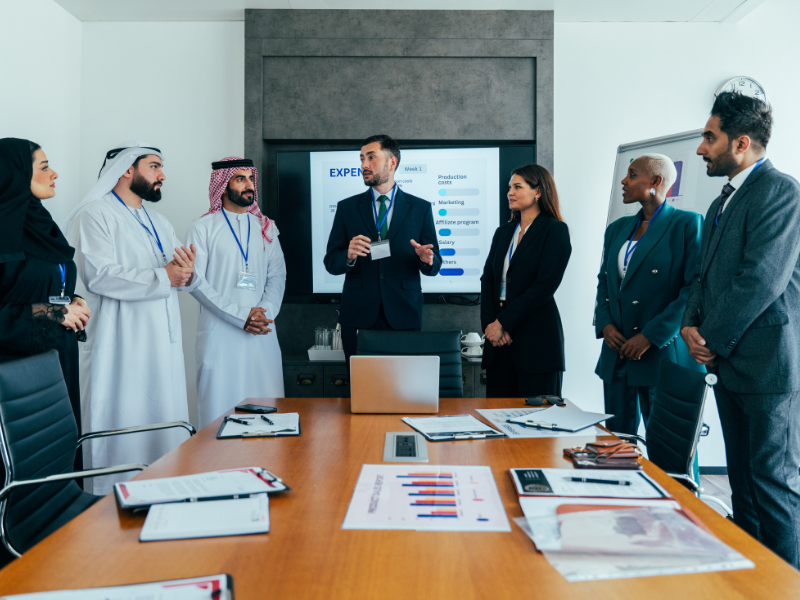
Visit nearly any mid-sized company in Kuwait and a familiar picture emerges. The leadership team is genuinely diverse, spanning nationalities, generations, and, more and more often, both men and women. Yet the managers beneath them were rarely prepared to lead that kind of variety. Most were promoted for excelling in their previous role, not because they learned how to chair a meeting where five nationalities bring five different communication styles, or how to help the only woman on a team of eight men feel confident challenging a decision.
This challenge isn’t unique to Kuwait, but it takes a particular shape here, and it’s precisely the kind of gap that manager effectiveness coaching is designed to fill.
The Manager Gap Is a Business Issue, Not a Soft Skills Issue
It’s easy to treat manager development as optional. The data suggests otherwise. Gallup’s 2026 State of the Global Workplace report found that global manager engagement dropped from 27% to 22% in just one year, the steepest decline Gallup has ever recorded for this measure. Gallup’s research also explains why this is so significant: managers drive about 70% of the variation in their team’s engagement. When a manager is struggling, the effects ripple outward into turnover, missed deadlines, and sluggish decisions made because no one felt comfortable voicing a concern.
That final point is especially relevant for multicultural, mixed-gender teams. A manager who hasn’t learned inclusive facilitation will often, without realizing it, allow the most senior or most vocal person to dominate discussions. Gradually, everyone else learns to hold back. And once a team stops speaking up, it stops innovating.
Why This Matters Even More in Kuwait’s Workplaces Today
Kuwait’s private sector is truly diverse, combining local talent, a large expatriate workforce, and a growing number of women stepping into management and senior positions. Managed well, that blend is a major strength. Managed poorly, it becomes a liability, because hierarchy and seniority carry considerable cultural weight here. That weight can subtly discourage junior employees, recently hired expatriates, or women on mixed teams from offering a different perspective, even when their view is the correct one.
Manager effectiveness coaching tackles this head-on and in practical terms, rather than through a generic diversity seminar. A well-coached manager picks up specific habits: opening meetings in a way that gets more than one person talking, holding one-on-one check-ins with team members who stay quiet in groups, and judging an idea on its merit rather than on the seniority of the person who raised it. None of this means discarding local business culture. It simply means layering stronger leadership skills on top of it.
The International Coaching Federation’s 2025 Global Coaching Study, among the largest surveys of the coaching profession globally, found that 73% of coaches now report that clients and organizations expect them to hold a professional credential or certification, an increase over prior years. This reflects a wider trend: organizations across the Gulf no longer see coaching as a perk reserved for executives. It is becoming a standard way to develop the managers who connect strategy with execution, delivered by coaches expected to meet a recognized professional benchmark.
What Manager Effectiveness Coaching Looks Like in Practice
Coaching managers is not the same as training them. Training delivers knowledge; coaching shifts behavior. A typical engagement matches a manager with an ICF-credentialed coach for a series of structured sessions, generally centered on real situations the manager is dealing with right now rather than theoretical case studies.

For a manager leading a multinational, mixed-gender team in Kuwait, sessions might focus on:
- Running a decision-making meeting where every voice is genuinely heard, whatever a person’s rank or tenure
- Delivering direct feedback within a hierarchical culture without it coming across as disrespectful
- Supporting a talented woman on the team who is capable but reluctant to speak up for herself
- Handling the mental strain of competing priorities without losing focus on the people doing the work
This is where leadership coaching and manager-focused coaching overlap without being identical. Leadership coaching tends to emphasize strategic vision and executive presence. Manager coaching is more hands-on, concentrating on the everyday behaviors that decide whether a team thrives or stalls.
Results You Can Expect
Organizations that invest in coaching their managers usually see improvement in three areas within the first few months:
- Quicker, sounder decisions. When more people feel safe sharing their input, managers gather fuller information before acting, rather than discovering a problem once it has already become costly.
- Reduced quiet attrition. Employees, particularly women and new hires on mixed teams, often leave not over salary but because they feel ignored. Coached managers spot this sooner and deal with it directly.
- Better cross-cultural teamwork. Managers build a reliable set of habits for keeping diverse teams aligned, instead of depending on instinct or a single communication style that suits only part of the team.
These benefits build on one another. A manager who gets better at drawing out varied viewpoints doesn’t just improve one team; they develop a habit that influences how the entire department works, well after the coaching has ended.
FAQ
How is manager coaching different from executive coaching?
Executive coaching usually focuses on senior leaders and covers strategy, vision, and organizational influence. Manager coaching targets frontline and mid-level skills that shape daily team performance, such as communication, feedback, delegation, and inclusive facilitation.
How long does a typical manager coaching engagement last?
Most run between three and six months, with regular sessions built around real, current challenges rather than a set curriculum.
Can coaching genuinely address cultural dynamics like hierarchy or gender balance?
Yes, provided the coach understands the local context. A coach with experience across the Gulf and Asia will incorporate strategies for hierarchy, mixed-gender teams, and multicultural communication instead of relying on a one-size-fits-all Western model.
Does it work for virtual or hybrid teams?
Yes. Coaching through a virtual platform suits managers of remote or hybrid teams well, since sessions can be scheduled flexibly and coaches can be matched by language, industry, or regional background.
How can we tell whether our managers need this?
Typical red flags include slow decisions, feedback conversations that get avoided or postponed, high turnover among junior or female employees, and meetings where only one or two people ever contribute.
The Takeaway
Diverse, mixed-gender teams are among Kuwait’s greatest business strengths when they’re well led. Manager effectiveness coaching ensures that strength isn’t squandered by managers who were never shown how to lead across differences. It’s a practical investment, not a soft one, and it pays off in retention, better decisions, and a workplace where people feel free to speak up.
Ready to explore what this could mean for your team? Book a discovery call with CoachBase, or browse our network of ICF-certified coaches to find the right fit for your organization. You can also learn more about our approach to coaching for managers.